
Fitch Ratings on Wednesday raised India's GDP growth forecast to 6.9 per cent for current fiscal year, from 6.5 per cent earlier, citing strong June quarter growth and domestic consumption-led demand.

S&P Global Ratings on Wednesday said the impact of the US reciprocal tariff will be limited on India as the economy is domestically oriented with less reliance on exports. YeeFarn Phua, Director, Sovereigns and International Public Finance Ratings, Asia-Pacific S&P Global also said India will clock a 6.7-6.8 per cent GDP growth over the next two years.

I'...additional concessions, such as opening government procurement, reducing agricultural subsidies, weakening patent protections, and allowing unrestricted data flows -- demands India has resisted for decades.'

The time is ideal for a 'Dream Budget' akin to the 1991 reforms that sparked high growth and unlocked significant gains in productivity, points out Rajeswari Sengupta.
'Maintain a balanced approach with a preference for short-to medium-duration funds.'

State governments have raised serious reservations against a plea by the aviation ministry and domestic carriers to reduce sales tax on aviation turbine fuel. Worse still, states like Kerala which had reduced the tax rate from 28.5 per cent to 4 per cent to encourage carriers to buy from the state have decided to take back the benefit alleging that it is not being passed on to the customers as promised.

State governments have requested the Centre for export incentives, lifting of import duty in the case of cotton for the textile sector and GST exemptions.

India will be the world's third-largest economy by 2028 as it becomes the world's most sought-after consumer market and gains share in global output, driven by macro stability influenced policy and better infrastructure, Morgan Stanley said. From a $3.5 trillion economy in 2023, the Indian economy is projected to expand to $4.7 trillion in 2026, which will make it the fourth largest in the world behind the US, China and Germany.

Inflows into gold exchange-traded funds (ETFs), which manage a total of Rs 37,390 crore, have surged sharply in recent months. This trend is likely to continue, especially after the reintroduction of long-term capital gains tax (LTCG), which is likely to attract smart money into mutual fund offerings amid a robust outlook for the yellow metal. Smart money, also known as opportunistic flows, refers to strategic investments that are generally of a short-term horizon.

The Karur tragedy has exposed the huge gaps in Vijay's understanding of realpolitik, elections and political administration, asserts N Sathiya Moorthy.

The stock and bond markets told Trump firmly that any idea of isolating China would lead to harming the US economy and this forced Trump to backtrack, points out Aakar Patel.

The government on Friday cut the windfall profit tax on locally produced crude oil in line with a fall in international rates, and reduced the levy on export of diesel and jet fuel (ATF). At the fifth fortnightly review, the government reduced tax on domestically-produced crude oil to Rs 10,500 per tonne from Rs 13,300 per tonne. The levy on the export of diesel was reduced to Rs 10 per litre from Rs 13.5. Also, the tax on Aviation Turbine Fuel (ATF) exports was cut to Rs 5 a litre from Rs 9 with effect from September 17, according to a finance ministry notification issued late Friday night.
'If the near-term economic pain is absorbed more by those who have the ability and the financial strength to do so, then small and medium enterprises in downstream industries will emerge stronger from the trade imbroglio.'

Hero MotoCorp Ltd (HMCL) has been the best-performing auto stock over the last three months, gaining over 17 per cent during this period. Multiple tailwinds, especially on the rural front, are expected to boost its volumes. In addition to the demand drivers, new launches too should help drive growth both in the commuter and premium motorcycle categories.

The more things change, the more they remain the same for corporate India. In the April-June 2025 period (Q1FY26) - for the ninth consecutive quarter - listed companies witnessed only single-digit revenue growth, while their core earnings, excluding other income and one-time gains, contracted for the second time in four quarters. This comes as firms brace for the impact of 50 per cent US tariff on Indian goods.

While this will incur a revenue loss amounting to 0.2 per cent of GDP, it will provide a strong boost to consumer sentiment and spending, points out Rajani Sinha.

Uttar Pradesh's leading export hubs are reeling under the impact of a steep 50 per cent tariff imposed by the US on Indian imports, with exporters warning of job losses, stalled orders and shrinking market access. Industry leaders from Noida, Kanpur and Varanasi said the tariff has put years of painstaking market-building at risk, even as protests and demonstrations erupted in several districts last week.

'We have created massive infrastructure in the past six years.'

RBI's interest rate decision, quarterly earnings and global cues would be the major driving factors for equity markets this week, analysts said adding that the impact of the Union Budget could linger on this week. Trading activity of foreign investors will also be a key driver for the markets, experts noted. "US and India's manufacturing PMI for January to be released on Monday, will be the key macro data to watch out for.

India on Thursday signed a free trade agreement, officially dubbed as the Comprehensive Economic and Trade Agreement (CETA), with the UK - its 16th trade pact so far - as the country aims to boost bilateral trade and investments.
In a path breaking move, US President Barack Obama said he will not extend tax cuts for rich Americans.

The feud reached its peak when Musk made explosive allegations about Trump's connection to disgraced financier Jeffrey Epstein, marking a dramatic escalation in their increasingly personal conflict.

The textile and apparel sector is India's second-largest employment provider, after agriculture, and it is now caught in a wave of uncertainty following the Donald Trump administration's tariff policy.

From the 30-share blue-chip pack, Mahindra & Mahindra, Zomato, Tata Motors, IndusInd Bank, Reliance Industries, Larsen & Toubro, UltraTech Cement, HDFC Bank, Adani Ports and Bajaj Finserv were among the major laggards. On the other hand, Hindustan Unilever, Tech Mahindra, Nestle, Bharti Airtel and ICICI Bank were among the gainers.

Trump made it clear he had no plans to speak with Musk anytime soon, stating, "I'm too busy doing other things," and added, "I have no intention of speaking to him," NBC News reported.

Sources said much has been done to ease the tax burden of the middle classes in the last five years, and that such a measure affects only a limited segment of people when the focus should be to put money in rural areas. Archis Mohan reports.
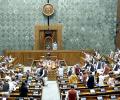
India's opposition parties have sharply criticized the Union Budget, calling it inadequate to address the country's economic woes and accusing the BJP-led government of using it to woo voters in Bihar and Delhi ahead of upcoming elections. Leaders from the Congress, TMC, DMK, SP, and CPI(M) voiced their disapproval, highlighting concerns over inflation, unemployment, and the lack of substantial measures to support the agricultural sector and the poor. They also criticized the tax cuts for the middle class as insufficient and coming too late after years of high taxes and rising prices.

The liquidity deficit in the banking system crossed Rs 2 trillion again on Monday, despite the second instalment of cash reserve ratio (CRR) reduction coming into effect from December 28.

At the end of the day, this isn't about choosing between EMIs and SIPs. It's about choosing your path to financial freedom.

The government has cut the windfall profit tax on crude oil produced in the country while the levy on exports of diesel and ATF has been hiked, an official notification said. The tax, levied in the form of special additional excise duty or SAED, on domestically produced crude oil was reduced to Rs 6,700 per tonne from Rs 7,100 a tonne. SAED on the export of diesel was increased to Rs 6 per litre from Rs 5.50 a litre and on jet fuel or ATF to Rs 4 per litre from Rs 2, the notification said.

Despite the benefits of hybrid technology, a lack of government backing and few launches have kept the segment from gaining ground.
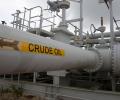
The government has cut windfall profit tax on export of diesel and ATF to their lowest while also reducing the levy on domestically-produced crude in line with softening international oil prices, according to an official order. The levy on crude oil produced by companies such as Oil and Natural Gas Corporation (ONGC) has been cut to Rs 4,350 per tonne from Rs 5,050 per tonne, the order dated February 15 said. Crude oil pumped out of the ground and from below the seabed is refined and converted into fuels like petrol, diesel and aviation turbine fuel (ATF).

An increase in the farmer income support scheme PM Kisan Nidhi, the introduction of a 'robot tax' to fund reskilling of people who lose their jobs to artificial intelligence (AI), and a reduced income-tax (I-T) to bring relief to the middle classes - these are some of the items in the Budget wish list submitted by Sangh Parivar affiliates to Finance Minister (FM) Nirmala Sitharaman. Representatives of the affiliates of the Rashtriya Swayamsevak Sangh (RSS), such as the farmer organisation Bharatiya Kisan Sangh (BKS); trade union Bharatiya Mazdoor Sangh (BMS); Laghu Udyog Bharati, which works for micro and small industries; and Swadeshi Jagran Manch (SJM), which works on economic and policy issues, met the FM and other officials over the last couple of weeks as part of the pre-Budget consultations.

'Geopolitically and diplomatically it's a very difficult situation for India.'

Experts say the state's economy is grappling with hidden debt, rising welfare costs, and lack of transparency.

Direct tax collection, net of refunds, moderately exceeded the revised estimates (RE) for the financial year 2023-24 (FY24) on the back of personal income tax revenues, but corporation tax receipts fell short of the RE. Net direct tax collection stood at Rs 19.58 trillion in FY24, surpassing the RE of Rs 19.45 trillion by Rs 13,000 crore, or 0.7 per cent. The government had revised up FY24 projections for personal income tax by 13.5 per cent over the Budget estimates (BE) of Rs 9 trillion, at Rs 10.22 trillion.

'If you look at where inflation (headline and core) is today in India and where the rates are, there's clearly room to cut rates.'

The reduced growth is largely because of consumption slowdown and tax rate cuts.
